
Why Corporate Web Design Matters More Than You Think
Corporate web design is the process of creating a professional online presence that represents your company, builds credibility, and drives business results. It’s your digital handshake, your 24/7 salesperson, and often the first impression potential clients, partners, or investors have of your brand.
Quick Answer: What Makes Corporate Web Design Successful?
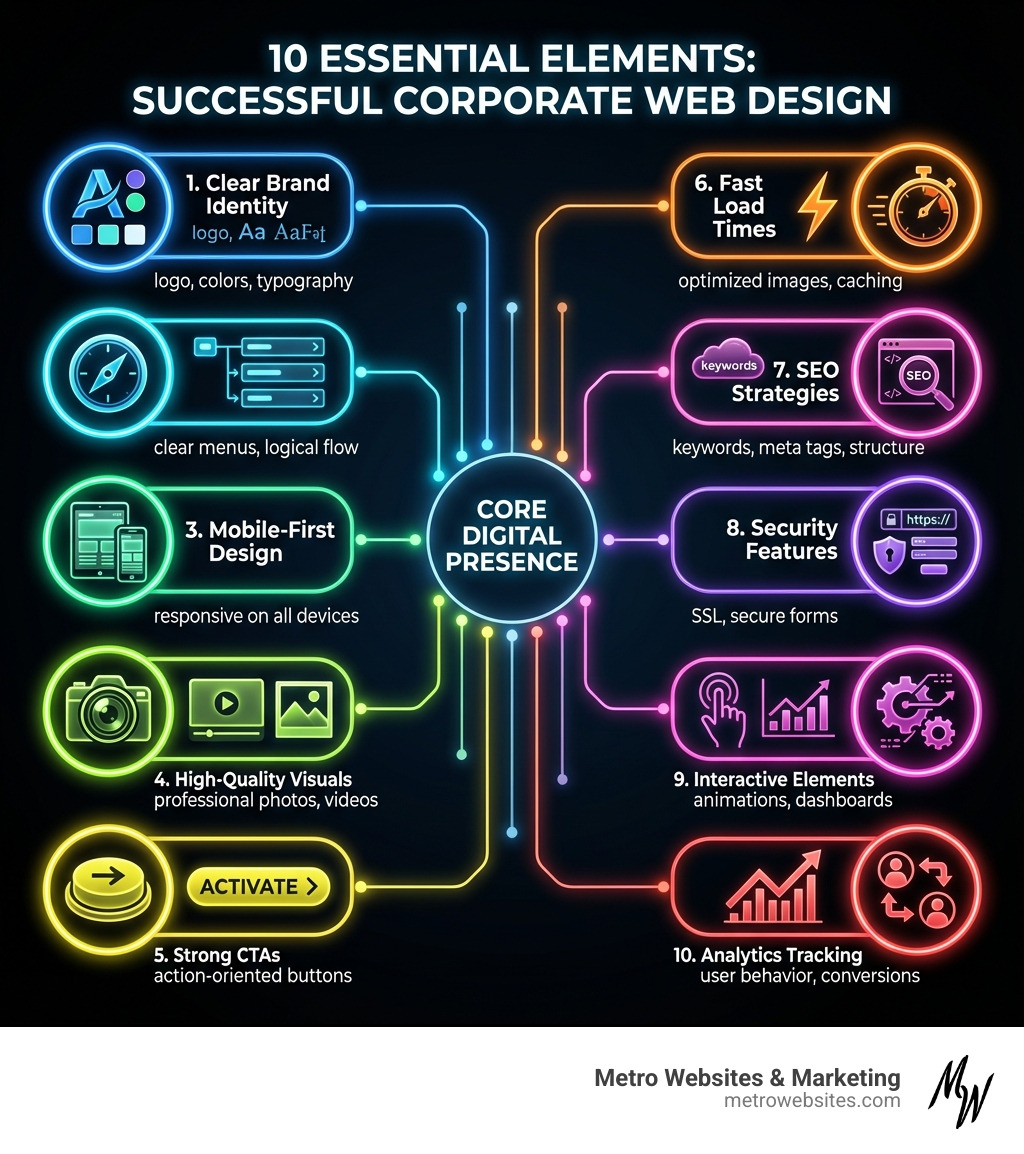
- Clear brand identity – consistent logos, colors, and typography
- Intuitive navigation – users find what they need quickly
- Mobile-first design – works perfectly on all devices
- Fast load times – optimized for speed and performance
- Strong CTAs – guide visitors to take action
- High-quality visuals – professional photos and graphics
- SEO optimization – helps people find you on Google
- Security features – SSL certificates and privacy policies
- Compelling content – clear, scannable, and valuable
- Analytics tracking – measure what works and improve
Here’s the reality: 94% of first impressions relate to web design, and a staggering 75% of your company’s credibility comes from your website design. If your site looks outdated, loads slowly, or confuses visitors, you’re losing business before you even get a chance to speak with them.
Your website isn’t just a nice-to-have anymore. It’s a must-have strategic asset that can make or break your business growth. More than half of all web traffic comes from mobile devices, and Google looks at the mobile version of your website first. If your site doesn’t work well on smartphones, you’re invisible to a huge portion of your potential customers.
The good news? A well-designed corporate website becomes your most powerful marketing tool. It works around the clock, telling your story, building trust, and converting visitors into leads and customers.
I’m Tyler Smith, and I’ve been helping businesses transform their online presence through strategic corporate web design since 2016. My marketing management background gives me a unique perspective on how design choices drive real business results, and I’m here to show you what works.
The Foundations: Purpose, Brand, and Trust
At its core, the primary purpose of a corporate website is to serve as the digital front of a company. It’s where we offer insights, articulate our corporate values, and provide detailed information on our products or services. Unlike e-commerce sites that are primarily transactional, our corporate web design emphasizes credibility, branding, and communication.
It’s crucial for building brand integrity and engaging with potential clients, investors, and partners. This digital hub isn’t just a brochure; it’s a powerful tool for lead generation, customer acquisition, and even attracting top talent. By effectively communicating our mission and values, we lay the groundwork for lasting relationships and sustained growth.
More info about our Business services
Why a Strong Brand Identity is Crucial for Corporate Web Design
Imagine meeting someone for the first time. Their appearance, mannerisms, and how they present themselves immediately form an impression. Your corporate website does the same for your business. A strong brand identity, consistently applied across your digital presence, is non-negotiable. It’s the foundation of brand recognition and fosters trust with your audience.
Elements like our logo, color palette, and typography aren’t just aesthetic choices; they form a cohesive design system that becomes synonymous with our brand. This visual consistency ensures that every interaction a visitor has with our site reinforces who we are and what we stand for. A polished corporate aesthetic makes lasting impressions and helps us stand out in a crowded digital landscape. We believe in changing client ideas into action, and creating an unforgettable brand identity is a huge part of that.
Our Simple Logo Design services
Building Credibility and Trust with Your Audience
Credibility isn’t given; it’s earned. And on a corporate website, every element contributes to that trust. We understand that investors, potential talent, partners, and even the media use our website as a primary verification point. It’s where they come to confirm our existence, assess our leadership, and understand our strategic direction.
That’s why authenticity is key. Our mission statements should be genuine, not ‘consultant versions.’ If we have ESG (Environmental, Social, and Governance) commitments, we present them as strategic initiatives, not just public relations. Incorporating social proof, such as client testimonials, case studies, and prominently displayed customer logos, acts as powerful third-party validation. Furthermore, robust security measures, including SSL certificates and clear privacy policies, are essential for protecting user data and building confidence. We also make sure our leadership bios are accessible, as media often pulls quotes directly from C-suite profiles.
The 10 Essential Elements of Modern Corporate Web Design
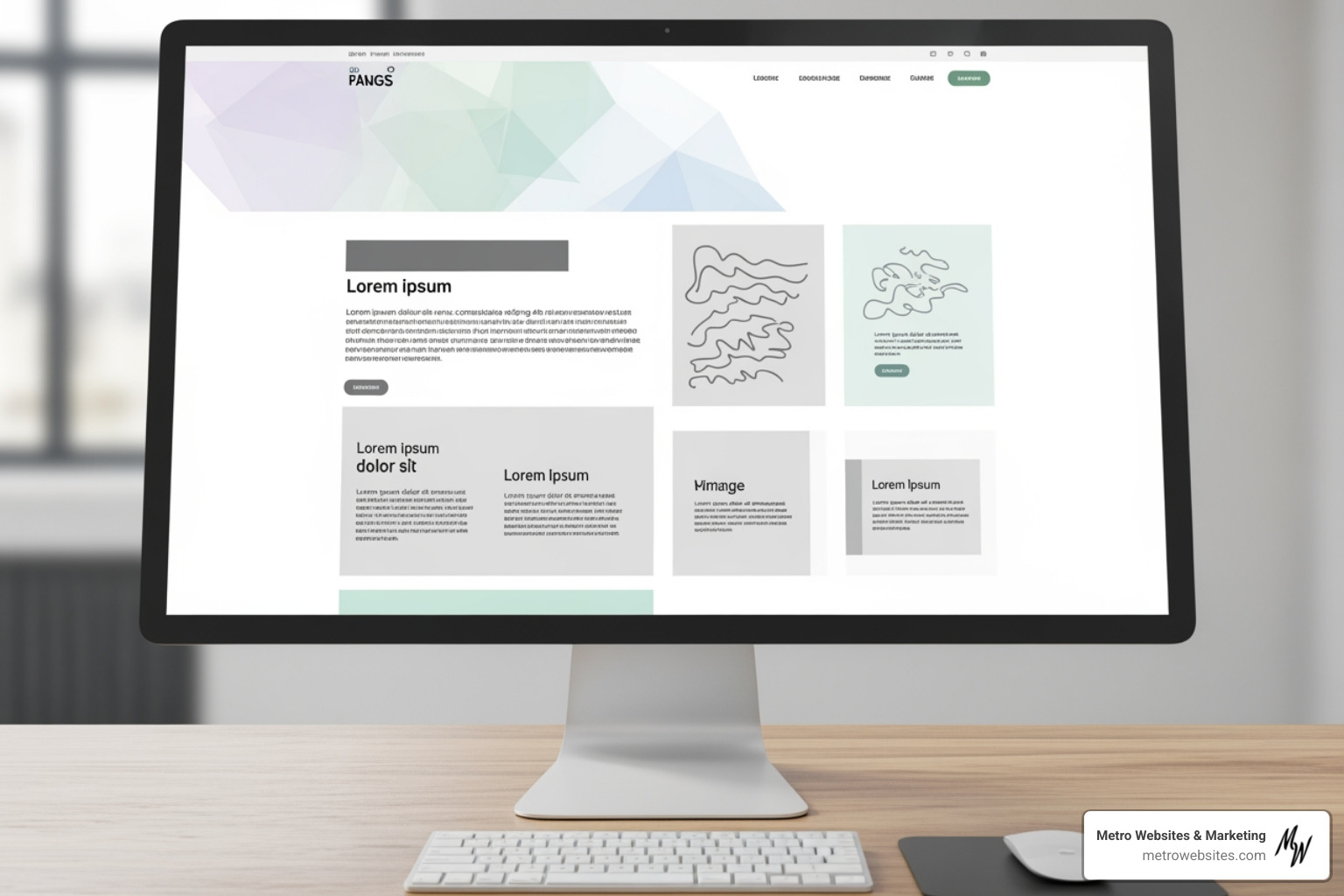
Now that we’ve covered the foundational aspects, let’s dive into the nuts and bolts of what makes a corporate web design truly successful. These 10 elements are critical for ensuring an exceptional user experience (UX), robust functionality, and stellar performance.
1. Intuitive Navigation and User-Friendly Content Structure
Think of your website’s navigation as a GPS for your visitors. An intuitive navigation system ensures users can find what they need quickly and easily, without getting lost or frustrated. This means a logical flow, clear labels for menu items (no cryptic jargon, please!), and a consistent structure across all pages.
For content, we aim for a user-friendly structure that makes information digestible. This involves:
- Using clear headers and subheadings to break up text.
- Employing bullet points and numbered lists for scannability.
- Utilizing ample white space to prevent visual clutter and improve readability.
A well-organized website, like a well-organized closet, makes everything easy to find. Common navigation menu items often include:
- Home
- About Us
- Services/Products
- Blog/News
- Contact Us
2. Responsive and Mobile-First Design
It’s no secret: more than half of all web traffic comes from mobile devices. This isn’t just a trend; it’s the new standard. A corporate web design must adapt flawlessly across all screen sizes, from the largest desktop monitors to the smallest smartphones. This is where responsive and mobile-first design comes in.
Google, our digital overlord, looks at the mobile version of our website first when determining rankings. If our site isn’t optimized for mobile, we’re essentially invisible to a massive audience and missing out on crucial SEO benefits.
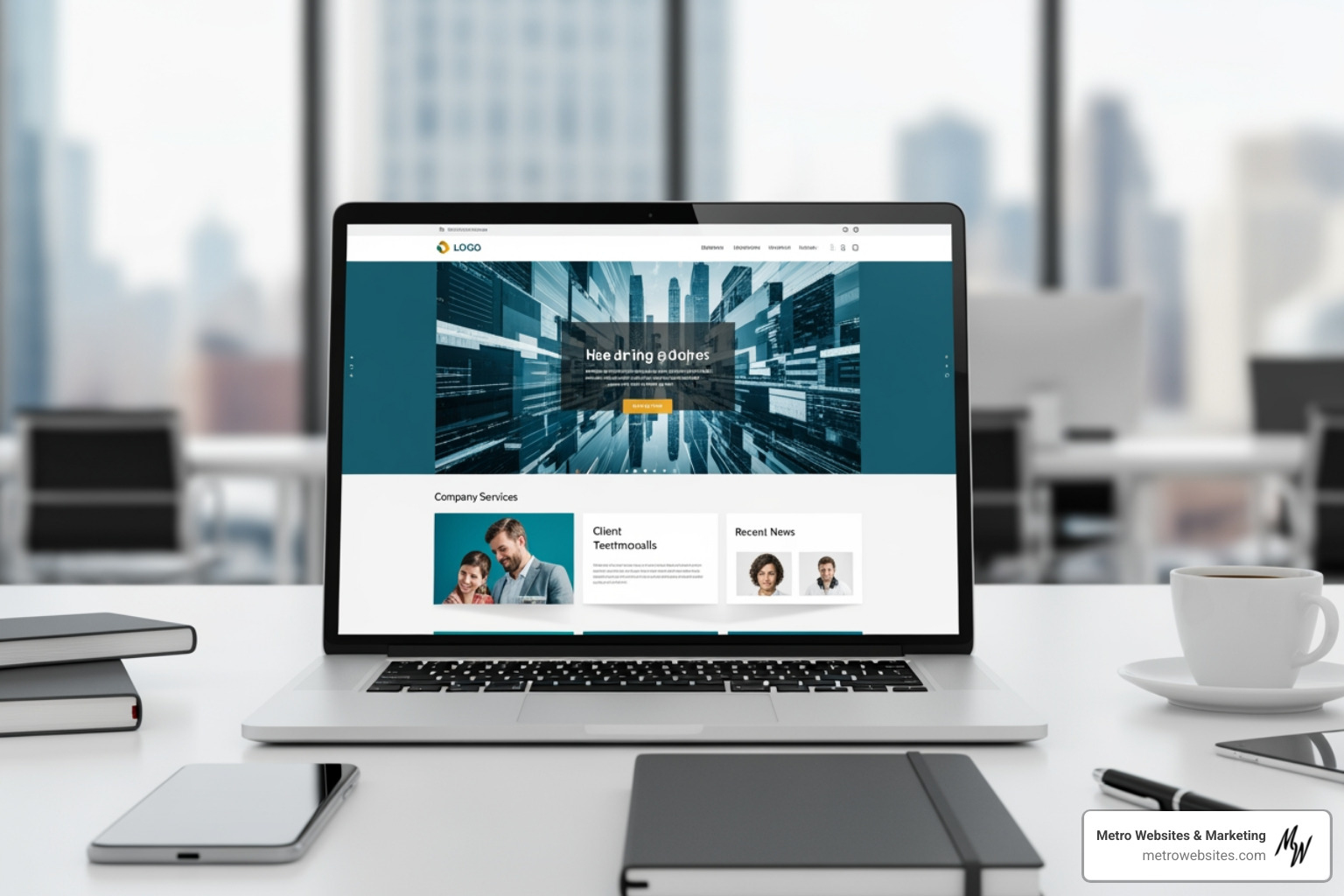
Key to responsive design are fluid grids and flexible images that automatically adjust to fit the user’s screen, ensuring a polished look and optimal functionality, no matter the device.
3. High-Quality Visuals and Media
In the digital world, a picture (or a video!) is worth a thousand words. High-quality visuals and media are paramount for creating a professional aesthetic and enhancing engagement. Grainy, pixelated images are the digital equivalent of wearing socks with sandals – not a good look for a corporate website.
We recommend using high-resolution photos, professional videos, and engaging infographics to support our content and convey complex information quickly. These visual elements should align perfectly with our brand ethos and be optimized for web performance to avoid slowing down the site.
Check out our Graphic Design options
4. Strong and Effective Calls to Action (CTAs)
A website without strong Calls to Action (CTAs) is like a road trip without signposts – visitors won’t know where to go or what to do next. CTAs are crucial for guiding visitors toward desired actions, whether it’s downloading a whitepaper, requesting a demo, or contacting us for a consultation.
Effective CTAs use action-oriented language (“Learn More,” “Get Started,” “Contact Us”) and are visually prominent, standing out from the surrounding content. We often use contrasting colors and strategic placement to make sure they catch the eye. A/B testing different CTA designs and copy is essential for optimizing their effectiveness and boosting conversion rates.
5. Fast Load Times
Patience is a virtue, except when it comes to website load times. If our site takes too long to load, visitors will bounce faster than we can say “corporate web design.” This impacts user retention and, consequently, our bottom line.
Google also takes load times into account for ranking, so a slow site can hurt our search engine visibility. To achieve lightning-fast speeds, we focus on:
- Image compression: Reducing file sizes without sacrificing quality.
- Browser caching: Storing parts of our site so repeat visitors load pages quicker.
- Content Delivery Network (CDN): Distributing our content across multiple servers globally, so users access it from the closest location.
Optimizing for speed is like tuning up a race car; it ensures peak performance and a smooth ride for every user.
6. Fundamental SEO Strategies for Corporate Web Design
What good is a beautiful website if no one can find it? That’s where Search Engine Optimization (SEO) comes in. SEO strategies ensure our corporate web design is findable by our target audience when they’re searching for our products or services. It’s like giving our website a megaphone in the crowded digital marketplace.
Key SEO strategies include:
- Keyword optimization: Integrating relevant keywords naturally into our content.
- Meta tags and alt text: Crafting compelling meta descriptions and providing descriptive alt text for images to help search engines understand our content.
- Clean site structure: A logical and well-organized website helps search engines crawl and index our pages efficiently.
- Content freshness: Regularly updating our content with new, relevant information signals to search engines that our site is active and valuable.
Boost your visibility with our SEO services
7. Essential Security and Privacy Features
In today’s digital landscape, trust is paramount. Robust security and privacy features are non-negotiable for any corporate web design. They protect not only our business but also our users’ sensitive information. Leaving our website’s security unattended is like leaving our front door open uped.
We ensure our websites have:
- SSL certificates (HTTPS): Encrypting data exchanged between the user and our site.
- Secure forms: Protecting personal and financial information submitted through our website.
- Regular security audits: Proactively identifying and fixing vulnerabilities.
- Clear privacy policies: Transparently communicating how we collect, use, and protect user data, often adhering to regulations like GDPR or CCPA.
8. Interactive Elements
Interactive elements transform a static website into a dynamic, engaging experience. They capture user attention, encourage exploration, and make our content more memorable. We’re not talking about flashy, distracting animations, but subtle, purposeful interactions.
Examples include:
- Subtle animations: Guiding the user’s eye or highlighting key information.
- Interactive dashboards: Allowing users to explore data or customize views.
- Quizzes or calculators: Providing value and engaging users actively.
These elements create a more immersive user journey, inviting visitors to dig deeper into our offerings and brand story.
9. Analytics and Performance Tracking
If we’re not tracking our website’s performance, we’re flying blind. Analytics and performance tracking are essential for making informed decisions and continuously improving our corporate web design. They provide invaluable insights into how users interact with our site.
We monitor key metrics such as:
- Traffic sources: Where our visitors are coming from.
- User behavior: What pages they visit, how long they stay, and where they click (often visualized with heatmaps).
- Conversion rates: How many visitors complete our desired CTAs.
By understanding what’s working and what’s not, we can refine our strategies, optimize our site, and ensure it continues to be a powerful growth lever.
Our Marketing services can help you grow
10. Accessibility (WCAG)
An inclusive website is a successful website. Accessibility ensures that our corporate web design is user-friendly for all, including individuals with disabilities. Adhering to Web Content Accessibility Guidelines (WCAG) isn’t just good practice; it’s a commitment to reaching every potential audience member.
Key accessibility features include:
- Screen reader compatibility: Allowing visually impaired users to steer and understand content.
- Keyboard navigation: Ensuring users who cannot use a mouse can still access all interactive elements.
- High-contrast colors: Improving readability for users with visual impairments.
- Alt text for images: Providing textual descriptions for images, crucial for screen readers and when images don’t load.
By prioritizing accessibility, we create a welcoming and functional experience for everyone.
Get Inspired: Examples of Excellent Corporate Websites
Looking for inspiration? We certainly are! The world of corporate web design is constantly evolving, with industry leaders setting new benchmarks for visual storytelling and user experience. Awwwards-winning sites often showcase cutting-edge design trends and innovative approaches. By studying the best, we can learn valuable lessons and apply them to our own projects.
Showcase of top corporate websites
What can we learn from the best? They balance aesthetics with functionality, creating sites that are not just beautiful but also incredibly effective at achieving business objectives. Let’s look at a few archetypes of successful corporate websites.
Example 1: The Minimalist Powerhouse
Think of sites that exude authority and sophistication through simplicity. These are the minimalist powerhouses. They feature clean layouts, ample white space, and often bold, striking typography. Their messaging is focused and direct, cutting through clutter to deliver a clear brand statement.
A prime example is GE’s homepage, which is minimal and focused on its recent change. It uses a full-width image carousel showing GE’s impact in aviation, energy, and healthcare, with a headline that tells a story of legacy and change. This approach conveys a sense of strong authority and clarity.
See an example of minimalist design
Example 2: The Interactive Storyteller
Some corporate websites excel at engaging visitors through dynamic and interactive experiences. These sites often use engaging animations, video-led hero sections, and subtle scrollytelling to guide users through a compelling narrative. UI previews and floating elements can also draw attention and showcase product capabilities effectively.
Stripe, for instance, is considered a gold standard in B2B tech websites. Everything from their navigation to their page layouts, animations, and product illustrations is spot on, creating an exciting and compelling brand experience that tells a story of innovation.
See an example of interactive design
Example 3: The B2B Trust Builder
For business-to-business (B2B) companies, where sales cycles are long and decisions are high-stakes, building trust is paramount. These websites prioritize clear value propositions, prominently display customer logos, and feature in-depth case studies and data-driven statistics to build credibility.
Salesforce’s homepage is a fantastic example. It’s clean and built to drive action, guiding users through product features and use cases with engaging animations and UI previews. They also effectively use customer logos as powerful trust signals, demonstrating their impact and reliability to other businesses.
Frequently Asked Questions
What are the key differences between corporate websites and e-commerce websites?
While both are crucial for a business’s online presence, corporate websites and e-commerce websites serve distinct purposes and have different primary goals.
| Feature | Corporate Website | E-commerce Website |
|---|---|---|
| Primary Goal | Inform, educate, build brand, generate leads | Sell products/services directly, facilitate transactions |
| Content Focus | Company information, mission, values, services, news, investor relations | Product catalogs, descriptions, pricing, reviews, shopping cart |
| Main Call to Action | Request a demo, contact us, download a report, learn more | Add to cart, buy now, checkout, view product |
| Audience Focus | Stakeholders (investors, partners, media), potential employees, clients | Customers ready to purchase |
| Key Metric | Lead generation, brand awareness, engagement, time on site | Sales, conversion rate, average order value |
A corporate web design is designed to serve as the digital front of a company, offering insights, corporate values, and information on products or services. An e-commerce site, conversely, is primarily focused on enabling online transactions.
How should content be structured on a corporate website?
Content structure on a corporate website is critical for optimal user experience and SEO. We recommend a hierarchical structure that is logical and user-centric. Think of it like organizing a library:
- Start with broad topics: Your homepage and primary navigation should cover the main areas of your business (e.g., Services, About Us, Resources).
- Funnel to specific details: Each broad category then leads to more specific sub-pages. For example, “Services” might lead to “Web Design,” “SEO,” and “Social Media Marketing.”
- Use clear headings and subheadings: Within each page, break down content using H1, H2, H3 tags to create a visual hierarchy. This makes content scannable and helps users quickly grasp the main points.
- Employ bullet points and short paragraphs: Make complex information digestible.
- Educate, don’t just sell: According to Forbes, clients want companies to educate them on their services, not just sell. Focus on creating valuable content through landing pages and blog articles that address their needs and questions.
Don’t sell, educate your customers
Read our Blog for more tips
How much does a corporate website cost?
The cost of a corporate web design can vary widely, much like the cost of a car – it depends on the features, size, and level of customization. Factors influencing the price include:
- Complexity of design: A minimalist site will cost less than one with extensive animations and interactive elements.
- Number of pages: More pages generally mean more content creation and design work.
- Custom features: Unique functionalities, integrations with other systems (like CRM), or custom development significantly increase costs.
- Platform choice: Using a robust Content Management System (CMS) like WordPress might be more cost-effective than a completely custom build.
- Agency vs. freelancer: Full-service agencies often have higher rates but offer comprehensive expertise and dedicated teams.
For large corporations with complex needs, a custom-built solution might be necessary, reflecting the strategic asset that the website represents. We encourage you to discuss your specific needs with us to get an accurate estimate.
Request a Free Consultation for a custom quote
Transform Your Vision into a Powerful Digital Asset
We’ve covered a lot of ground today, from the foundational purpose of a corporate web design to the 10 essential elements that make it successful, and even looked at some inspiring examples. The takeaway is clear: a well-designed corporate website isn’t just a luxury; it’s a must-have. It balances user experience (UX), speed, and compelling content to become your company’s most powerful marketing tool.
At Metro Websites & Marketing in Kansas City, MO, we pride ourselves on turning complex ideas into immersive digital solutions. We believe in providing professional service and creating unforgettable brand identities that resonate with your audience and drive tangible results. Your website is your biggest growth lever – are you getting the most out of it?
Let us help you craft a digital presence that truly represents your brand, builds trust, and converts visitors into loyal customers.
Explore our Website Design services and start building your digital front door today!